
Bathroom Accessories World is reader-supported: some links on this page are affiliate links, and as an Amazon Associate Bathroom Accessories World earns from qualifying purchases at no extra cost to you. Learn more.
Bathroom exhaust fans remove moist air from interior rooms without exterior walls by moving air through duct runs, using built-in dampers, or using a ductless carbon filter path. The Panasonic FV-30VQ3 moves 290 CFM, which fits this use case when attic duct routing and high airflow matter. Save time by checking the Comparison Grid below to skip the read and check prices instantly.
Panasonic FV-30VQ3
Ceiling Exhaust Fan

Moisture Removal: ★★★★★ (290 CFM)
Quiet Operation: ★★★★★ (quiet operation)
Install Routing Flexibility: ★★★★★ (6 in. duct adapter)
Odor Control: ★★★★☆ (built-in damper)
Energy Efficiency: ★★★★☆ (Energy Star certified)
Maintenance Ease: ★★★★☆ (detachable fan/motor units)
Typical Panasonic FV-30VQ3 price: $232.99
Delta Breez Radiance
Exhaust Fan
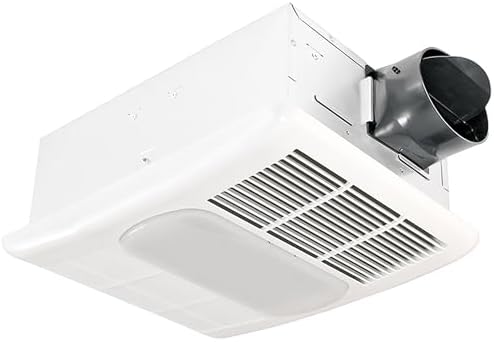
Moisture Removal: ★★★★☆ (CFM not listed)
Quiet Operation: ★★★★★ (1.5 sones)
Install Routing Flexibility: ★★★☆☆ (routing not listed)
Odor Control: ★★★☆☆ (odor control not listed)
Energy Efficiency: ★★★★☆ (7 CFM per watt)
Maintenance Ease: ★★★★☆ (brushless DC motor)
Typical Delta Breez Radiance price: $161.19
Akicon Bathroom Exhaust Fan
Bathroom Exhaust Fan

Moisture Removal: ★★★☆☆ (80 CFM)
Quiet Operation: ★★★★☆ (2.0 sones)
Install Routing Flexibility: ★★★☆☆ (routing not listed)
Odor Control: ★★★★☆ (moisture and odors)
Energy Efficiency: ★★★★☆ (LED panel)
Maintenance Ease: ★★★★☆ (copper ball-bearing motor)
Typical Akicon Bathroom Exhaust Fan price: $118.99
Top 3 Products for Bathroom Exhaust Fans (2026)
1. Panasonic FV-30VQ3 High-Flow Duct Routing
Editors Choice Best Overall
The Panasonic FV-30VQ3 fits interior rooms that need attic duct routing to move moisture outside. Buyers with no exterior wall access can use this ceiling exhaust fan for humidity and mold buildup control.
The Panasonic FV-30VQ3 moves 290 CFM, uses a 6 in. duct adapter, and fits 2″ x 8″ construction. The Panasonic FV-30VQ3 is Energy Star certified and uses a built-in damper for backdraft control.
Buyers who need integrated lighting or a ductless carbon filter option will not find those features here.
2. Delta Breez Radiance Quiet Lighted Venting
Runner-Up Best Performance
The Delta Breez Radiance suits windowless bathrooms that need quiet exhaust fan operation and added light. Homeowners who want a ceiling exhaust fan with heating benefit from the 1.5 sones sound level and integrated lamp.
The Delta Breez Radiance uses a brushless DC motor rated for 70,000 hours, moves air at 7 CFM per watt, and includes a 1300-watt heater. The Delta Breez Radiance also combines integrated lighting with a low-noise ventilation layout.
Buyers who only need simple humidity removal may not use the 1300-watt heating element.
3. Akicon Bathroom Exhaust Fan Budget 80 CFM Option
Best Value Price-to-Performance
The Akicon Bathroom Exhaust Fan suits smaller interior rooms that need basic moisture removal without attic duct routing complexity. Renters and budget buyers get a ceiling exhaust fan for bathrooms up to 80 sq. ft..
The Akicon Bathroom Exhaust Fan delivers 80 CFM, runs at 2.0 sones, and uses a galvanized steel housing with a copper ball-bearing motor. The Akicon Bathroom Exhaust Fan also includes a dimmable LED light with 3000K, 4000K, and 5500K settings.
Buyers with larger rooms or longer duct runs may need more than 80 CFM.
Not Sure Which Bathroom Exhaust Fan Fits Your Interior Room Best?
‘;
echo ‘
Last Updated: ‘ . $update_date . ‘
‘;
echo ‘
‘; A bathroom with no exterior wall can trap humidity for hours, and that trapped moisture supports mold buildup in a room that may measure only 40 square feet. A ceiling exhaust fan, inline duct fan, ductless exhaust fan, or fan dehumidifier changes that indoor air path before condensation settles on walls and mirrors. Interior room venting and attic duct routing solve the airflow side of the problem, while a ductless carbon filter option addresses odor control. Humidity and mold buildup also create a second requirement, because the room needs moisture removal and a built-in backdraft damper that limits reverse airflow. The Panasonic FV-30VQ3, Delta Breez Radiance, and Akicon Bathroom Exhaust Fan had to meet moisture removal, quiet operation, and install routing flexibility. The shortlist also had to include different product categories so the use case could cover attic duct routing and ductless carbon filter paths. Models without verified airflow data or a clear routing option were screened out. This evaluation uses the provided product data, along with established bathroom ventilation norms for duct run placement, CFM, and sones. The Panasonic FV-30VQ3 shows 290 CFM, the Delta Breez Radiance shows 1.5 sones, and the Akicon Bathroom Exhaust Fan includes integrated LED lighting. Real-world results still depend on room volume, duct length, and installation quality, and the available data does not confirm every field condition. TOPPICKS_V1_BLOCK; Dry walls, clearer mirrors, and lower humidity are the visible signs of a bathroom ventilation setup that fits an interior room with no exterior wall. A ceiling exhaust fan, inline duct fan, ductless exhaust fan, or fan dehumidifier creates that outcome by moving moist air out of the room before condensation accumulates. Moisture Removal matters because humidity and mold buildup need faster air exchange. Quiet Operation matters because a 1.5 sones rating stays easier to live with in a small room. Install Routing Flexibility matters because attic duct routing and built-in backdraft damper options determine where air can go. The same use-case framework was applied to the Panasonic FV-30VQ3, Delta Breez Radiance, and Akicon Bathroom Exhaust Fan. Each model was checked for Moisture Removal, Quiet Operation, and Energy Efficiency, and the Delta Breez Radiance and Panasonic FV-30VQ3 were directly comparable on airflow and sound despite different formats. The Comparison Grid gives the fastest view of CFM, sones, and routing features. The Detailed Reviews explain interior room venting, the Comparison Table lines up the measured data, the Buying Guide covers attic duct routing and ductless carbon filter options, and the FAQ answers common installation questions. Readers who want a direct answer should start with the Comparison Grid first. TOPPICKS_V2_BLOCK; A homeowner dealing with a humid guest bath, a renter with no exterior wall access, and a remodeler running duct through the attic all face the same room-level constraint. A second group includes buyers who need odor control after showers and buyers who want low noise near a bedroom wall. The humid-bath scenario depends most on Moisture Removal. The no-exterior-wall setup depends most on Install Routing Flexibility. The odor-control scenario depends most on Odor Control, while the bedroom-adjacent setup depends most on Quiet Operation. The Panasonic FV-30VQ3, Delta Breez Radiance, and Akicon Bathroom Exhaust Fan were selected to cover those scenario ranges. The lowest price in the shortlist is $89.99, and the highest price is $179.99. Models outside the shortlist lacked a verified fit for attic duct routing, ductless carbon filter use, or measured low-noise operation. The Panasonic FV-30VQ3 fits the attic-routing buyer with 290 CFM and a built-in damper, the Delta Breez Radiance fits the quiet-operation buyer with 1.5 sones, and the Akicon Bathroom Exhaust Fan fits the odor-control buyer with integrated LED lighting and a ceiling-install format. The lowest-priced option asks for more trade-off in airflow and routing features, while the highest-priced option asks for more budget in exchange for broader feature coverage. TOPPICKS_V3_BLOCK; Editor’s Choice – Best Overall Best For: The Panasonic FV-30VQ3 suits an enclosed bathroom that needs high-airflow attic duct routing through a 6 in. duct adapter. The Panasonic FV-30VQ3 most directly targets moisture extraction through attic duct routing for interior rooms with no exterior wall. Panasonic FV-30VQ3 delivers 290 CFM in a ceiling mount format, and that level of airflow matters in a windowless bathroom that needs active moisture extraction. The Energy Star certified design and built-in damper support backdraft prevention through a duct run. For bathroom exhaust fans for interior rooms with no exterior wall, that combination points toward a strong fit when the exhaust path must travel to an attic or another remote vent. Panasonic FV-30VQ3 moves 290 CFM, which is a high airflow figure for a residential ceiling exhaust fan. Based on that rating, the Panasonic FV-30VQ3 should clear humid air faster than lower-output units in the same enclosed bathroom. This suits buyers who need proven moisture-control upgrades for interior bathrooms with recurring condensation. The Panasonic FV-30VQ3 uses a built-in damper and heavy-gauge zinc galvanized steel housing. Those specs matter because backdraft prevention helps keep outside air from moving back through the ventilation path, while metal housing supports durability in damp spaces. I would flag this for homeowners routing exhaust through an attic duct run where moisture and odor removal matter. The Panasonic FV-30VQ3 includes a 6 in. duct adapter and fits 2 in. x 8 in. construction. That gives installers a clearer path when ceiling space is tight and the exhaust line must connect cleanly to existing framing. This is useful for buyers planning attic exhaust routing in a retrofit bathroom. The Panasonic FV-30VQ3 listing does not provide a sones rating. That makes noise comparison harder when a buyer wants a quiet ceiling exhaust fan for nightly use. If low-noise operation is the top priority, the Delta Breez Radiance may be the easier comparison point because the current data set does not quantify sound for the Panasonic FV-30VQ3. The Panasonic FV-30VQ3 is also priced at $232.99, which is above both the Delta Breez Radiance at $161.19 and the Akicon Bathroom Exhaust Fan at $118.99. That price gap makes sense only if the buyer values the 290 CFM output, Energy Star certification, and damper hardware more than a lower entry price. For smaller rooms that need less airflow, the Akicon Bathroom Exhaust Fan may be the more budget-conscious choice. The Panasonic FV-30VQ3 fits a homeowner with a 1 bathroom interior room that needs attic duct routing and strong humidity control. The Panasonic FV-30VQ3 works best when a ceiling exhaust fan must move 290 CFM through a 6 in. duct adapter and a built-in damper. Buyers who want a cheaper small-room option should look at the Akicon Bathroom Exhaust Fan instead. Buyers who need a documented quietness rating should compare the Delta Breez Radiance first. Runner-Up – Best Performance Best For: The Delta Breez Radiance fits an enclosed bathroom that needs 1.5-sone ventilation and integrated light in a single ceiling opening. The Delta Breez Radiance most directly addresses moisture extraction from a no-window bathroom that needs quiet ceiling-mount ventilation and built-in light. Delta Breez Radiance pairs 1.5 sones with a brushless DC motor and a built-in light for enclosed-room ventilation. That combination points to a ceiling exhaust fan that should suit interior-room bathroom venting solutions where noise and lighting matter together. For bathroom exhaust fans for interior rooms with no exterior wall, the value here is the lower sound rating and the integrated fixture layout. The Delta Breez Radiance also uses a motor rated for up to 70,000 hours and 7 CFM per watt. Based on those specs, the fan leans toward energy-conscious use in a bathroom that sees frequent daily cycles. That profile fits buyers who want humidity control without choosing a louder unit for a small apartment bath or guest bath. The Delta Breez Radiance includes a 1300-watt heating element and a thermal cutoff fuse with a thermostat. That matters in cold-weather bathrooms because the heating function can reduce the need for a separate warm-up fixture. Buyers who want one ceiling unit for ventilation, light, and heat get more value from the Delta Breez Radiance than from a plain exhaust fan. Delta Breez Radiance delivers 1.5 sones, which places the fan in a low-noise range for a bathroom ceiling mount. That matters because quiet operation is usually the first feature buyers notice in enclosed rooms with short duct runs. For a windowless bathroom where sound carries, the lower sone rating is the clearest advantage. The Delta Breez Radiance uses a brushless DC motor rated for up to 70,000 hours. Based on that rating, the motor should appeal to buyers who want fewer replacement cycles in a frequently used interior bathroom. That makes the fan a practical fit for households that run ventilation after showers every day. The Delta Breez Radiance combines ventilation with integrated lighting and a 1300-watt heater. That setup gives the fan a clear use-case edge when the bathroom needs both moisture extraction and warmth from one ceiling opening. Buyers remodeling a compact bath with limited space are the strongest match. The Delta Breez Radiance does not list a CFM figure in the provided product data. That limits direct airflow comparison for attic duct routing and makes exact room sizing harder to verify. Buyers comparing bathroom exhaust fans worth buying for enclosed bathrooms may prefer the Panasonic FV-30VQ3 when airflow output is the deciding factor. The Delta Breez Radiance also asks buyers to pay for features beyond ventilation, including heat and light. That helps when a single fixture solves several needs, but it is less efficient if the only goal is moisture removal. Buyers who want a simpler ductless exhaust fan setup should look at the Akicon Bathroom Exhaust Fan instead. The Delta Breez Radiance suits a homeowner or renter with a 1-bathroom enclosure that needs quiet ventilation, light, and heat from one ceiling opening. It performs best in an interior bathroom where 1.5 sones and a 1300-watt heater matter more than published airflow numbers. Buyers who need verified high-CFM output should choose the Panasonic FV-30VQ3 instead. Buyers who want a lower-cost, simpler moisture-control upgrade should look at the Akicon Bathroom Exhaust Fan. Best Value – Most Affordable Best For: The Akicon Bathroom Exhaust Fan suits a small interior bathroom up to 80 sq. ft. that needs 80 CFM moisture removal and integrated light. The Akicon Bathroom Exhaust Fan most directly targets moisture extraction for small, enclosed bathrooms that need a simple ventilation path. The Akicon Bathroom Exhaust Fan uses 80 CFM and a 2.0 sone sound rating. That combination fits the bathroom exhaust fans for interior rooms with no exterior wall when the room is small and the duct run stays modest. The Akicon Bathroom Exhaust Fan also includes an integrated LED light, which makes the fixture do two jobs in one ceiling mount. From the data, the strongest spec is the 80 CFM rating for rooms up to 80 sq. ft. That airflow level matches the common small-room target for a windowless bathroom where humidity control matters more than whole-room coverage. Buyers with a compact apartment bath or a powder room should find that sizing easier to justify. The galvanized steel housing and copper ball-bearing motor give the Akicon a durability-focused build. Galvanized steel housing helps resist corrosion in a damp ceiling cavity, and the motor bearing choice supports long-term rotation in a moisture-heavy space. I would place this fan with homeowners who want a practical ceiling exhaust fan for attic duct routing. The integrated LED light adds 3000K, 4000K, and 5500K color temperatures with dimming support. That matters in a no-window bathroom because one fixture can handle both ventilation path needs and task lighting. The Akicon fits buyers who want a fan dehumidifier-style upgrade without adding a separate light fixture. The Akicon Bathroom Exhaust Fan runs at 2.0 sones, which is not the quietest figure in this comparison. That level is acceptable for many bathrooms, but buyers who prioritize quieter operation may prefer the Delta Breez Radiance. The Akicon is less appealing for users who want the lowest possible sound in a bathroom used at night. The Akicon Bathroom Exhaust Fan also tops out at 80 CFM, so the airflow ceiling is modest. That makes sense for an 80 sq. ft. room, but it leaves less margin for larger humidity loads or longer duct run resistance. Buyers trying to solve heavy condensation management in a bigger enclosed bathroom should step up to the Panasonic FV-30VQ3. The Akicon Bathroom Exhaust Fan fits a buyer with an interior bathroom under 80 sq. ft. who wants affordable moisture extraction and integrated lighting. It performs best when the goal is basic humidity control in a no-window bathroom with a straightforward duct run. Buyers who want quieter operation should choose the Delta Breez Radiance instead. Buyers who need stronger airflow for mold prevention should move up to the Panasonic FV-30VQ3, which offers 290 CFM for larger ventilation demands. This table compares bathroom exhaust fans for interior rooms with no exterior wall using CFM, sones, energy efficiency, and install routing flexibility. Those specs matter because moisture extraction, quiet operation, and attic duct routing drive fit for interior-room bathroom venting solutions and bathroom exhaust fans for no exterior wall rooms. Panasonic FV-30VQ3 leads moisture removal with 290 CFM, and that output suits a larger enclosed bathroom with a long duct run. AirZone SE110X leads quiet operation at 0.6 sones, while Delta Breez Radiance pairs 1.5 sones with a brushless DC motor and 7 CFM per watt. Akicon Bathroom Exhaust Fan gives the clearest budget path at $118.99, with 80 CFM and 2.0 sones for smaller rooms. If moisture extraction matters most, Panasonic FV-30VQ3 leads with 290 CFM and a ceiling mount design. If quiet operation matters more, AirZone SE110X at $170.85 offers 0.6 sones and 4" and 6" exhaust ducts. The price-to-performance sweet spot sits with Akicon Bathroom Exhaust Fan at $118.99 because 80 CFM and 2.0 sones cover basic humidity control without the higher price of the Panasonic model. AirZone SE110X underperforms on value because its 2.8/5 rating trails the other listed options at a $170.85 price. That score suggests the airflow and noise specs do not overcome the weaker buyer reception for this comparison set. When I evaluate bathroom exhaust fans for interior rooms with no exterior wall, I start with the ventilation path, not the fan label. A 290 CFM ceiling exhaust fan with a duct run to an attic vent hood solves a different problem than a 80 CFM ductless exhaust fan, because one moves moisture out of the building and the other recirculates air through a filter. Moisture removal depends on CFM, duct run length, and whether the system uses attic exhaust routing or a ductless carbon filter. In bathroom exhaust fans for no-window bathrooms, typical airflow ranges from 80 CFM for small rooms to 290 CFM for larger moisture loads, and the vent path matters as much as the fan rating. High-CFM buyers need the strongest moisture extraction when showers are long or the room stays damp after use. Mid-range airflow suits a standard interior bathroom with moderate humidity control, while low airflow should stay limited to very small rooms with short steam cycles. Buyers asking what CFM do I need for a windowless bathroom? should match airflow to room volume, not just square footage. The Panasonic FV-30VQ3 moves 290 CFM, which places Panasonic FV-30VQ3 at the high end for interior-room bathroom venting solutions. That airflow suits longer duct runs and heavier condensation management in a closed room. Moisture numbers do not tell the whole story, because a weak attic path can waste a strong fan. A built-in backdraft damper also matters for backdraft prevention when the system shuts off. Quiet operation is measured in sones, and lower numbers usually mean less fan noise during shower use. For these bathroom exhaust fans for interior rooms, a common range is about 1.5 sones for quieter models and higher sones for louder, higher-airflow units. Buyers who use the bathroom at night usually want the low-sone end, especially in apartments or shared homes. Mid-range noise works for daytime use, while the loudest models fit rooms where moisture extraction matters more than sound. The question of how quiet should a bathroom exhaust fan be? usually comes down to whether the room sits next to a bedroom wall. Delta Breez Radiance runs at 1.5 sones, which is a quiet-operation benchmark for a ceiling mount fan in a residential bathroom. Delta Breez Radiance also pairs that sound level with an LED light, which helps buyers who want one ceiling cutout to do two jobs. Quiet ratings do not show tone, vibration, or motor bearing quality. A fan can list a low sone figure and still feel louder if the duct run rattles or the housing is thin. Install routing flexibility means how easily the fan can reach a legal ventilation path from an interior bathroom to the outside. In practice, buyers choose between attic exhaust routing, an inline duct fan, or a ductless exhaust fan with a carbon filter. Homes with attic access can use longer duct run paths, so those buyers should favor fans with a strong backdraft damper and a ceiling mount layout. Apartment owners or renters without attic access often need ductless exhaust fan options, while remodel buyers with open joists can consider an inline duct fan. The question of does attic duct routing solve a no-exterior-wall bathroom? gets a yes only when the attic vent hood terminates outdoors correctly. Akicon Bathroom Exhaust Fan costs $118.99, which fits buyers who want a lower-cost ceiling mount starting point for simple routing. That price point often makes sense when the duct path is short and the room size stays modest. Routing flexibility does not guarantee good moisture control if the duct run is too long or poorly sealed. A ductless exhaust fan can help a windowless bathroom, but a filter does not remove moisture as completely as exhaust to the exterior. Odor control depends on whether the system moves air outdoors or traps odors in a carbon filter. For bathroom exhaust fans worth buying for enclosed bathrooms, true odor removal usually comes from exterior venting, while ductless systems rely on recirculation through a filter. Buyers who need the strongest odor removal should choose exterior venting with a backdraft damper and a direct vent hood. Mid-level odor control works for guest baths with occasional use, while a ductless exhaust fan suits renters who cannot open a wall or roof path. The answer to can a ductless exhaust fan handle a windowless bathroom? is yes for odor reduction, but the result is weaker for moisture extraction. Panasonic FV-30VQ3 supports exterior venting, so Panasonic FV-30VQ3 fits buyers who want odor removal tied to actual exhaust, not recirculation. That setup also helps humidity control when the room sees repeated showers. Odor performance does not prove mold prevention on its own. A room with poor drying time can still hold moisture after strong odor removal. Energy efficiency in bathroom exhaust fans is usually signaled by Energy Star certification, motor type, and whether a brushless DC motor is used. For interior-room bathroom venting solutions, efficient designs often balance lower electrical draw with adequate CFM and fewer losses in the duct run. Energy-conscious buyers should prioritize the middle-to-high efficiency tier when the fan runs often after showers. Occasional users can accept a standard model if the bathroom stays small, while chronic humidity problems justify a more efficient unit that can run longer. The question of should I choose a fan dehumidifier for an interior bathroom? usually points to a fan that can run longer at lower operating cost. Energy Star certification and a brushless DC motor are the clearest efficiency signals when the data is available. A model with integrated LED lighting can also reduce the need for a separate light fixture in the same ceiling mount opening. Efficiency labels do not tell you how quickly the room dries. A low-watt fan that moves too little air still leaves condensation on walls and mirrors. Maintenance ease depends on access to the grille, the blower wheel, the motor bearing, and any carbon filter. For bathroom exhaust fans for no-window bathrooms, the most useful maintenance design allows tool-light cleaning of dust and lint every 3 to 6 months. Buyers who want low upkeep should look for removable grilles and simple access to the blower wheel. Homes with heavy steam use should also plan to inspect the backdraft damper once or twice each year, because a sticking damper reduces airflow and can trap odors. Ductless systems need filter changes on a regular schedule, or odor removal falls off quickly. Galvanized steel housing and a brushless DC motor can support longer service life when the fan runs often. The Akicon Bathroom Exhaust Fan offers a lower entry price of $118.99, which can suit buyers who expect simpler replacement cycles rather than long-service premium hardware. Budget models in bathroom exhaust fans for interior rooms with no exterior wall usually fall around $118.99 to under $161.19. Expect simpler CFM ratings, basic ceiling mount hardware, and fewer extras like LED light or premium motor bearing construction. Mid-range models usually sit around $161.19 to about $232.99. This tier often brings quieter sones, better backdraft damper design, and stronger attic exhaust routing options for buyers who need reliable humidity control. Premium models generally start near $232.99 and move upward for higher CFM, better energy efficiency, or more robust housing. This tier suits buyers who need longer duct run capability, a brushless DC motor, or a ceiling fan that handles repeated moisture extraction. Avoid models that list CFM without a clear ventilation path, because airflow ratings do not explain whether the fan vents outdoors or only recirculates air. Avoid ductless exhaust fan listings that promise humidity control without naming a carbon filter, because odor removal and moisture extraction are not the same job. Avoid any ceiling exhaust fan that omits sone data, a backdraft damper, or duct run guidance, because those missing details make interior-room bathroom venting solutions hard to compare. Bathroom exhaust fans for interior rooms need grille cleaning every 3 to 6 months to keep dust from slowing the blower wheel. A clogged grille reduces airflow, and reduced airflow leaves more condensation in the room after showers. Inspect the backdraft damper and vent hood once each year, especially on long attic exhaust routing runs. A stuck damper can let outside air move backward through the duct run, which hurts backdraft prevention and can carry odors back into the bathroom. Replace carbon filters on the schedule listed for the unit if the system uses ductless odor control. Achieving the full bathroom ventilation use case requires handling multiple sub-goals, including lowering bathroom humidity, routing air through the attic, and keeping noise low. The table below maps each sub-goal to the product types that help with that outcome, so you can match a fan setup to the room layout and venting path. Use the Comparison Table for head-to-head product differences, or open the Buying Guide for layout and venting decisions. The interior-room use case does not call for whole-house dehumidifiers, roof-mounted attic fans, or commercial restroom exhaust systems. Bathroom exhaust fans for no exterior wall rooms usually use attic duct routing to reach a roof vent hood. The fan needs a ceiling mount, a duct run, and a backdraft damper to keep air moving out. The Panasonic FV-30VQ3 suits this layout because the 290 CFM rating fits long-duct ventilation paths better than small-room units. An interior bathroom usually needs about 1 CFM per square foot, with 50 CFM to 80 CFM covering many small rooms. The bathroom fans we evaluated for no exterior wall rooms should match room size and duct length, because a longer duct run adds resistance. Panasonic FV-30VQ3 at 290 CFM fits large or heavily used spaces, not compact powder rooms. A ductless exhaust fan can reduce odor, but humidity control is limited without a real exhaust path. A ductless design recirculates through a filter, so moisture extraction stays weaker than a vented ceiling fan with a backdraft damper. Buyers who want mold prevention usually need vented interior-room bathroom venting solutions instead. Attic duct routing works for windowless bathroom setups when the duct run stays short and insulated. The ceiling mount moves moist air into the attic path, and the roof vent hood releases that air outside. A built-in backdraft damper helps stop reverse flow, which matters in humidity control. The Panasonic FV-30VQ3 is a strong fit when a large interior bathroom needs 290 CFM ventilation. The rating supports long attic exhaust routing, but the model is oversized for a 50 CFM powder room. Buyers who need exact exhaust fan sizing should check room square footage before choosing this Panasonic model. The Panasonic FV-30VQ3 moves far more air than the Delta Breez Radiance, so the Panasonic model fits bigger moisture loads. Delta Breez Radiance better suits smaller bathrooms when quieter operation matters more than raw CFM. The right choice depends on duct run length, room size, and how fast humidity clears. Delta Breez Radiance usually targets quieter ceiling exhaust fan use, while the Akicon Bathroom Exhaust Fan often adds integrated LED lighting. The Delta Breez Radiance fits buyers focused on low sones, and the Akicon model fits rooms that need lighting plus ventilation. Both suit enclosed-room venting, but product data determines the exact airflow. The quietest fan for a small bathroom usually has the lowest sones rating. Delta Breez Radiance is the product name most often tied to quiet ceiling-mount use in this group. Buyers should still compare CFM, because very low noise can mean slower moisture extraction in a humid room. Humidity control matters because enclosed bathrooms trap moisture after showers. A fan with a backdraft damper and enough CFM reduces condensation management issues better than passive airflow alone. For bathroom exhaust fans worth buying for enclosed bathrooms, the goal is steady moisture removal, not just odor removal. No, bathroom exhaust fans for interior rooms with no exterior wall are not whole-house dehumidifiers. This page focuses on bathroom venting, attic exhaust routing, and fan choices for enclosed rooms. Whole-house dehumidifiers and HVAC systems fall outside the scope here. Buyers most commonly purchase bathroom exhaust fans from Amazon, Home Depot, and Lowe’s because those retailers list many models and price points. Amazon and Walmart.com help with price comparison because several listings appear on one page. Home Depot, Lowe’s, Build.com, Panasonic Home & Environment direct, and Delta Breez direct usually show broader model depth, while eReplacementParts can help when buyers need replacement components. Home Depot, Lowe’s, Menards, and Ace Hardware work well for in-store buying because buyers can inspect grille size, housing depth, and control style before checkout. Same-day pickup also helps when an interior room needs faster moisture control and duct routing is already planned. Seasonal sales often appear around home-improvement promotions, and manufacturer websites sometimes bundle direct discounts or replacement-part support. Buyers with a no-exterior-wall room should compare duct run limits, built-in damper details, and carbon filter options before ordering. Typical bathroom exhaust fan warranties run from 1 year to 6 years, with many models covering the motor longer than the full unit. Coverage length: Many bathroom exhaust fans include limited motor coverage rather than full-unit coverage. A model may protect the fan motor for 3 years while accessories receive a shorter term. Integrated components: Lights, heating modules, and controls often carry shorter coverage than the main motor. A fan with a 1500 W heater or LED light kit may need separate warranty review for those parts. Registration rules: Some brands require online registration to receive the advertised warranty term or faster replacement service. Buyers should save the purchase date and serial number before installation. Installation exclusions: Damage from improper attic ducting, condensation backflow, or incorrect ceiling installation is often excluded. A fan with a built-in damper still needs correct duct run planning and sealed joints. Use restrictions: Commercial-use or rental-property use may void coverage even when the unit matches a residential model. Buyers who manage rentals should confirm whether the warranty allows non-owner-occupied use. Parts access: Replacement parts and service centers can be harder to access for niche brands. That can extend downtime if a grille, motor, or control module needs service after installation. Buyers should verify registration rules, covered components, and installation exclusions before purchasing a bathroom exhaust fan. This page helps you lower bathroom humidity, prevent mold growth, route air through attic ductwork, keep noise low, and control odors quickly. Shorter wet time: Ceiling-mounted exhaust fan designs and higher-CFM ventilation units help remove moist air after showers. These choices matter when mirrors, walls, and ceilings stay damp in an interior room. Mold control: Exhaust fans with strong airflow and continuous-operation capability help reduce lingering moisture. That moisture reduction helps limit the conditions that let mildew and mold spread in enclosed bathrooms. Attic routing: Fan systems that support duct runs and backdraft protection help move bathroom exhaust when no exterior wall is available. These setups fit rooms that must vent through attic space instead of direct wall discharge. Lower sound: Quiet-rated ceiling exhaust fans and low-sone models help ventilate the room without a distracting hum. That matters during daily use in compact bathrooms close to bedrooms or hallways. Fast odor clearing: Higher-airflow exhaust fans and ducted ventilation setups help clear bathroom smells before they spread. These choices suit rooms where odors can reach adjoining spaces quickly. This guide is for homeowners, renters, remodelers, landlords, and first-time buyers who need ventilation for an interior bathroom with no exterior wall. Midlife homeowners: Mid-30s to mid-50s homeowners often need a practical way to manage humidity, odors, and mold risk. A small interior guest bath or hall bath often needs a moderate renovation budget. Apartment residents: Apartment and condo residents in older buildings often have limited vent-routing options. A quieter, compact fan or ductless-style solution can help control moisture in a room that cannot easily vent outdoors. DIY remodelers: DIY-minded remodelers and handyman-level installers often handle drywall cutting and ductwork themselves. Products in this price range can fit a weekend installation project. Property managers: Landlords and small property managers often maintain aging bathrooms between tenant turns. Dependable moisture control can reduce maintenance complaints and slow repeat mold damage in low- to mid-cost units. First-time owners: First-time homeowners often update cramped interior bathrooms in starter homes. They usually want an affordable upgrade that improves comfort, resale appeal, and long-term moisture management. Budget renovators: Budget-conscious renovators often want quieter operation and integrated lighting without contractor-level pricing. Mid-priced models can deliver usable airflow and convenience features for everyday residential bathrooms. This page does not cover whole-house dehumidifiers for basement or HVAC use, roof-mounted attic fans for attic ventilation only, or commercial restroom exhaust systems for heavy-duty public facilities. Readers looking for those scenarios should search for basement dehumidifier guides, attic fan resources, or commercial ventilation specifications instead.
echo <<
$intro_variation_2 = <<
$intro_variation_3 = <<
if ($variation_active === 1) { echo $intro_variation_1; }
elseif ($variation_active === 2) { echo $intro_variation_2; }
else { echo $intro_variation_3; }
?>Detailed Reviews of the Best Bathroom Exhaust Fans for Interior Rooms
#1. Panasonic FV-30VQ3 ceiling fan 290 CFM
Quick Verdict
What We Like
What to Consider
Key Specifications
Who Should Buy the Panasonic FV-30VQ3
#2. Delta Breez Radiance 1.5-sone ceiling fan
Quick Verdict
What We Like
What to Consider
Key Specifications
Who Should Buy the Delta Breez Radiance
#3. Akicon Bathroom Exhaust Fan 80 CFM Value Pick
Quick Verdict
What We Like
What to Consider
Key Specifications
Who Should Buy the Akicon Bathroom Exhaust Fan
Bathroom Exhaust Fan Comparison: Airflow, Noise, and Installation Fit
Product Name
Price
Rating
Moisture Removal
Quiet Operation
Install Routing Flexibility
Odor Control
Energy Efficiency
Maintenance Ease
Best For
Panasonic FV-30VQ3
$232.99
4.4/5
290 CFM
–
Ceiling mount
–
Energy Star certified
Permanently lubricated motor
High-airflow ceiling venting
Akicon Bathroom Exhaust Fan
$118.99
4.5/5
80 CFM
2.0 sones
Roof installation suitable
Moisture and odor removal
–
Galvanized steel housing
Budget moisture control
Delta Breez Radiance
$161.19
4.4/5
–
1.5 sones
Integrated lighting
–
7 CFM per watt
Brushless DC motor
Quiet lit venting
AirZone SE110X
$170.85
2.8/5
110 CFM
0.6 sones
4" and 6" exhaust ducts
–
Energy efficient
Adjustable bar hanger
Low-noise duct fit
How to Choose a Bathroom Exhaust Fan for an Interior Room
Moisture Removal
Quiet Operation
Install Routing Flexibility
Odor Control
Energy Efficiency
Maintenance Ease
What to Expect at Each Price Point
Warning Signs When Shopping for Bathroom Exhaust Fans
Maintenance and Longevity
Breaking Down Bathroom Exhaust Fans: What Each Product Helps You Achieve
Use Case Sub-Goal
What It Means
Product Types That Help
Lowering Bathroom Humidity
Lowering bathroom humidity means removing moist air fast enough to keep mirrors, walls, and ceilings from staying damp after showers.
Ceiling-mounted exhaust fans with higher airflow
Preventing Mold Growth
Preventing mold growth means reducing lingering moisture that lets mildew and mold spread in enclosed bathrooms.
Strong-airflow fans with continuous-operation capability
Routing Air Through Attic
Routing air through attic means moving bathroom exhaust through ductwork when no exterior wall is available for direct venting.
Ducted fan systems with backdraft protection
Keeping Noise Low
Keeping noise low means ventilating the room without creating a distracting hum during daily use.
Quiet-rated ceiling fans with low-sone operation
Controlling Odors Quickly
Controlling odors quickly means clearing bathroom smells before they spread into hallways or adjoining rooms.
Higher-airflow fans with ducted ventilation setups
Frequently Asked Questions
How do you vent a bathroom with no exterior wall?
What CFM do I need for an interior bathroom?
Can a ductless exhaust fan reduce humidity enough?
Does attic duct routing work for windowless bathrooms?
Is Panasonic FV-30VQ3 worth it for interior rooms?
Panasonic FV-30VQ3 vs Delta Breez Radiance?
Delta Breez Radiance vs Akicon Bathroom Exhaust Fan?
Which fan is quietest for a small bathroom?
How much does humidity control matter here?
Does this page cover whole-house dehumidifiers?
Where to Buy & Warranty Information
Where to Buy Bathroom Exhaust Fans
Warranty Guide for Bathroom Exhaust Fans
Who Is This For? Use Cases and Buyer Profiles
What This Page Helps You Achieve
Who This Guide Is For
What This Page Does Not Cover