
Travel range for an electric wheelchair is the distance the chair can move on a single full charge, measured in miles. Most users require a range between 10 and 15 miles for standard daily tasks, though requirements scale significantly based on the specific environment and duration of use.
Recommended Travel Range for Electric Wheelchairs by Use Case
| Use Case | Recommended Travel Range | Why this number? |
|---|---|---|
| Nearby grocery store and return | 4 to 6.5 miles | Based on a 3 to 5 mile trip with 80% usable capacity accounted for. |
| Workplace commute (5 miles away) | 13 to 15 miles | Calculated from a 10 to 12 mile round trip with 80% usable capacity. |
| Large park navigation | 6.5 to 10 miles | Based on a 5 to 8 mile excursion with 80% usable capacity. |
| Full day of sightseeing | 21 to 29 miles | Derived from a 15 to 20 mile goal with 70% usable capacity. |
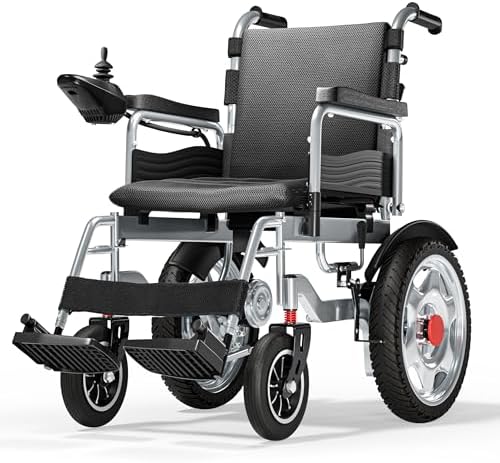
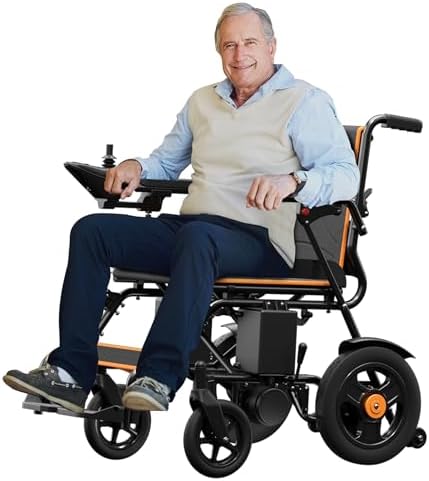
Examples from this category, each with its own review here
Prices across these 3 run from $399.99 to $899; each one has a full review here.
Understanding your budget is easier when you see what electric wheelchairs cost at every price level.

What happens if you go under or over on travel range?
Underestimating the required travel range for an electric wheelchair results in a risk of the battery depleting before the user reaches their destination. This creates a situation where the user is stranded or requires a manual intervention to move the chair. If the actual route involves inclines or rougher terrain, the power draw increases, which can shorten the available miles even further than planned. Do you need to worry about a 10-mile range if your trip is only 5 miles? You should account for a 20% buffer because terrain and weight impact the actual distance the chair can travel.
To maximize your distance, learn how to choose the best battery type for electric wheelchairs.
How extra battery weight affects electric wheelchair maneuverability and cost
Overbuying travel range involves paying for a larger battery system than the user actually needs for their daily routine. While a larger battery provides a safety net, it often adds physical weight to the chair and increases the cost of the unit. A chair with a 40-mile range is significantly heavier than one with a 10-mile range, which can affect the ease of maneuvering in tight indoor spaces. Buyers often assume more range is always better, but the extra weight of a massive battery can make the chair harder to transport or navigate through a standard doorway.
Ensure a comfortable fit by learning how to choose the right seat width for electric wheelchairs.
What is the most common mistake with travel range?
The most common mistake is choosing a chair based on the maximum theoretical range stated by a manufacturer without accounting for usable capacity. Most electric wheelchairs lose efficiency as the battery drains, and heavy loads or steep inclines significantly increase the power draw. A chair that claims a 20-mile range might only provide 14 to 16 miles of reliable travel in real-world conditions. Users should instead optimize for their most frequent trip and add a 20% to 30% buffer to that specific distance.
Calculating sufficient usable range for specific daily travel distances
This calculation ensures the user never reaches the “low power” state where the motor may struggle to provide consistent torque. If the primary goal is navigating a 2-mile radius around a home, a chair with a 5-mile usable range is sufficient. If the goal is a 10-mile round trip to a clinic, the user must seek a chair that provides at least 13 miles of usable range to account for environmental variables.
New users can find a basic overview in our guide on how an electric wheelchair works.
How does travel range interact with other electric wheelchair specs?
Travel range is often limited by other physical constraints of the electric wheelchair, such as seat width or weight capacity. A chair with a high travel range may have a large frame that is difficult to move through narrow hallways or into a vehicle. If the user requires a compact folding electric wheelchair, the battery size is often restricted by the folding mechanism, which limits the maximum miles available. In these cases, the physical size of the chair becomes the deciding factor over the battery capacity.
We provide a deep dive into the specs in our full AIRHOT Foldable Wheelchair review.
How user weight capacity reduces the total miles of a power chair
Weight capacity also creates a direct trade-off with the distance the chair can travel. A heavier user requires more torque from the motor, which draws more current from the battery and reduces the total miles available on a single charge. When the weight of the user approaches the maximum weight capacity of the frame, the efficiency of the battery drops. Users must balance the need for a high weight capacity with the desired travel range, as these two requirements often pull the design in opposite directions.
You can see the detailed specs in our full K04 Electric Wheelchair review.
Balancing motor power and battery capacity for navigating hilly terrain
Motor power is another factor that dictates how much of the battery is consumed during a trip. While motor power does not decide the total miles a chair can travel, it determines how much energy is required to maintain speed on an incline. A high-powered motor allows for easier climbing but will drain the battery faster than a lower-powered motor on the same hill. Therefore, a user who lives in a hilly area needs to prioritize a balance between motor power and battery capacity to ensure they can reach their destination without the motor stalling on an incline.
To see the full data breakdown, see our full Zurcheel Lightweight Electric Wheelchair review.
Market data showing a 15-mile median range for electric wheelchairs
The data from 114 electric wheelchair listings shows that travel range is stated as one figure by 101 of those models, with a median of 15 miles. This median suggests that most manufacturers target a middle-ground range that covers typical daily needs. However, the range varies significantly from 4 to 40 miles across the market. By understanding these limits, a buyer can identify whether a chair meets their specific requirements or if they need to look for a specialized high-capacity model for long-distance travel.
The rest of our electric wheelchair guides
- The Folding Electric Wheelchairs That Work Best for Adults
- Which Lightweight Power Chair Is Best for Travel?
- Best Electric Wheelchairs for Long Range
- Heavy Duty Power Wheelchairs Under $1000 Compared
- Which Lightweight Foldable Electric Wheelchair Is Best for Airplane Travel?
- The Electric Wheelchairs That Move Around Outside
Bathroom Accessories World is reader-supported: some links on this page are affiliate links, and as an Amazon Associate Bathroom Accessories World earns from qualifying purchases at no extra cost to you. Learn more.