
Clawfoot bathtubs provide a deep soaking experience and a period-correct aesthetic for a bathroom. A buyer needs a dedicated space for a freestanding tub with a footprint of at least 5 feet by 3 feet before installation. You must measure your bathroom’s clear floor area and verify that the plumbing can reach the center of the tub’s footprint.
How do alcove bathtubs compare to clawfoot bathtubs?
Alcove bathtubs are the standard three-sided tub and are the most common substitute for a clawfoot bathtub. These units are designed to sit against three walls, which eliminates the need for the decorative feet and the specific floor clearance required by a freestanding model. Because they occupy a fixed corner or wall space, they often provide a larger interior basin for the same amount of floor space.
For a more glamorous look, explore the best freestanding bathtub with gold hardware.
Alcove tubs offer a lower cost and easier installation than clawfoot models
The cost of an alcove tub is generally lower than a clawfoot bathtub because they do not require specialized heavy-gauge cast iron feet or complex freestanding plumbing. These tubs typically use acrylic or fiberglass, which makes them lighter and easier to transport. If you have a standard bathroom layout where the tub must sit against a wall, an alcove tub is the more practical choice.
If your priority is relaxation, compare the best slipper bath for deep soaking.
Alcove bathtubs stop making sense as a substitute when the primary goal is a freestanding aesthetic or a “pedestal” look. If your renovation plan relies on the visual of a tub standing alone in the room, an alcove tub will not provide that result regardless of its interior dimensions.
Where these choices show up in our reviews
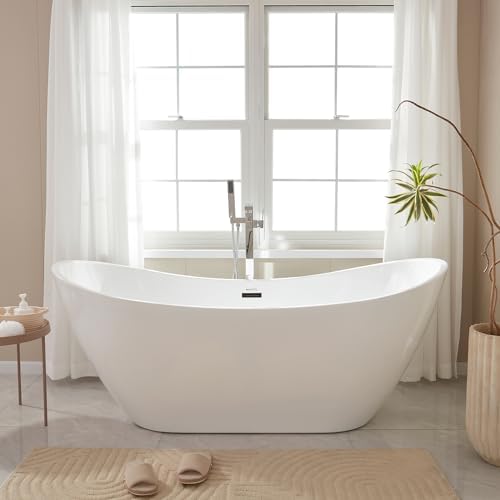
3 options shown here, $759.99 to $1119.99, each with its own full review behind its name.
For tighter floor plans, we recommend the best clawfoot bathtub for small bathrooms.


Can a shower stall replace a clawfoot bathtub?
A shower stall replaces a clawfoot bathtub by providing a high-volume cleaning area that does not require a soaking basin. These units are designed for vertical water flow and are typically much smaller in footprint than a freestanding tub. A standard shower stall requires a floor area of roughly 3 feet by 3 feet, whereas a clawfoot bathtub often requires 5 feet by 3 feet.
Before purchasing, learn how to choose your clawfoot bathtub width.
Shower stalls provide a full bathing area for small bathroom layouts
The cost of a shower stall is often comparable to a mid-range clawfoot bathtub, but the installation requirements differ significantly. A shower stall requires a floor drain and a specific waterproof wall treatment. If you have a small bathroom where a 5-foot-long tub cannot fit, a shower stall is the only way to maintain a full-sized bathing area.
You can study the different types of clawfoot bathtubs to see which fits your style.
A shower stall stops making sense as a substitute when the requirement is for a long soak. If you need to submerge your body in water for 20 minutes to relax, a shower stall cannot provide that depth or volume of water.
What are the risks of buying a used or refurbished tub?
Buying a used or refurbished tub allows a buyer to acquire a heavy-gauge cast iron clawfoot bathtub at a lower price point than a new unit. These items are often sourced from architectural salvage or estate sales. Because cast iron is durable, these units can last decades if the porcelain finish remains intact and the plumbing connections are sound.
It helps to see what each clawfoot bathtub price level gets you before buying.
Used clawfoot tubs require careful inspection of porcelain for spider cracks
The cost of a used tub varies wildly based on the condition of the porcelain and the presence of the original feet. You can find these units for a fraction of the cost of a new tub, but you must account for the cost of a professional restoration if the surface is chipped. A buyer should verify that the tub does not have “spider” cracks in the porcelain, which are difficult to repair and can lead to rust.
Make sure to research how to choose your clawfoot bathtub depth for comfort.
A used tub stops making sense when the structural integrity of the cast iron is compromised or the porcelain is severely pitted. If the tub requires a full sandblast and repaint, the cost of the restoration plus the risk of poor adhesion may exceed the price of a new, warrantied unit.
We provide a detailed breakdown of the Langkawi Freestanding Bathtub specifications.
Are portable soaking tubs a viable alternative?
A portable soaking tub is a collapsible or inflatable basin that provides a soaking experience without a permanent installation. These units are designed to be filled and drained in a space like a balcony or a large walk-in shower. They do not require any plumbing modifications or structural floor reinforcements.
Portable tubs provide a soaking experience for renters without permanent plumbing
The cost of a portable tub is significantly lower than any permanent clawfoot bathtub. These units are often made of heavy-duty PVC or reinforced fabric. If you live in a rental property where you cannot install a permanent tub or change the plumbing, a portable tub is the only way to achieve a soaking experience.
See our data-driven analysis of the Mokleba TB-205 Bathtub performance.
Thin materials in portable tubs cause water to lose heat quickly
A portable tub stops making sense when you want a permanent fixture that holds heat well. Because they are often made of thin materials, they lose water temperature quickly and do not offer the same “hot stone” feel of a cast iron tub. They also require a large volume of water to be hauled in and drained out, which can be a logistical burden.
View our comprehensive analysis of the Vanity Art VA6517-ORB specs.
Comparison of clawfoot bathtub alternatives
| Alternative | Who it suits | Main advantage | Where it breaks down |
|---|---|---|---|
| Alcove tub | Small bathrooms with wall space | Larger interior basin | Lacks freestanding aesthetic |
| Shower stall | Space-constrained layouts | Compact footprint | No soaking depth |
| Used/Refurbished | Budget-conscious collectors | Lower initial cost | Risk of surface damage |
| Portable tub | Renters or temporary use | No installation required | Poor heat retention |
When is buying a new clawfoot bathtub the right choice?
Buying a new clawfoot bathtub is the right choice when you require a permanent, high-durability fixture with a specific aesthetic that cannot be replicated by other types. This is the correct path if you have the floor space to accommodate a 5-foot-long tub and the budget to support a heavy-gauge cast iron unit. It is also the correct choice when you want a manufacturer’s warranty on the porcelain finish and the structural integrity of the casting.
Discover our detailed analysis of the Santorini Freestanding Tub features.
If you are planning a full bathroom renovation where the tub is a focal point of the room, a new unit ensures that the finish will not show signs of age or wear for decades. It is the correct choice when you want a consistent product where the weight and dimensions are guaranteed by the manufacturer rather than the variable condition of a used item.
More clawfoot bathtub explainers and comparisons
- Which Vintage Style Soaking Tub Is Best for a Master Bathroom?
- Best Freestanding Bathtubs with Gold Hardware
- Slipper Baths for Deep Soaking Compared
- Choosing the Best Antique Style Tub for a Modern Home
- The Clawfoot Bathtubs That Work Best for Budgets Under 1000 Dollars
- Space Saving Clawfoot Bathtubs for Small Bathrooms Compared
Bathroom Accessories World is reader-supported: some links on this page are affiliate links, and as an Amazon Associate Bathroom Accessories World earns from qualifying purchases at no extra cost to you. Learn more.