
A patient lift is a mechanical device designed to move and support a person, typically assisting with transfers into or out of a bathtub or from a wheelchair. You need a lift when a person’s mobility is limited to the point where manual lifting by a caregiver poses a risk of injury to either party. Before selecting a model, you should measure the width of your bathroom door and the clearance around the tub to ensure the frame can physically enter the space.
How a patient lift reduces physical strain and safety risks
The primary problem these devices solve is the physical strain and safety risk associated with manual lifting. For many caregivers, the weight of a person combined with the slippery surface of a wet bathroom floor creates a high-risk environment for falls. A patient lift provides a stable, mechanical advantage that removes the need for a human to bear the majority of the weight, ensuring the person being moved remains steady and supported throughout the transition.
If you need a reclining model, see our comparison of the best reclining bath lift chair.
How a Patient Lift Operates
The operation of a patient lift follows a specific mechanical sequence to ensure the user remains secure during the transition from a stationary position to a raised or moved state.
- The user is first positioned on a support surface, such as a chair or a transfer board.
- The lift’s sling or harness distributes the user’s weight across their body.
- A caregiver engages the motor or manual winch to lift the user vertically.
- The lift moves the user horizontally toward the destination, such as the edge of a tub.
- The mechanism tilts or rotates to align the user with the seating area of the destination.
- The user is lowered into the final position as the support surface is removed.
Patient Lifts we have reviewed in detail
Prices across these 3 run from $112.25 to $379.99; each one has a full review here.
To see how different models compare, view our guide to the best bath lift for seniors.


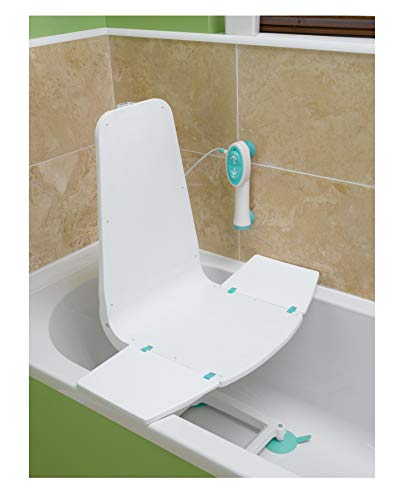
Parts and Standards That Matter
Several mechanical components and industry standards determine how a patient lift performs in a residential bathroom environment.
How suction cup stability prevents a patient lift from sliding
A Suction Cup provides the primary grip for floor-to-tub stability by creating a vacuum seal against the tub’s surface. This allows the lift to remain anchored while the user is being moved, preventing the base of the lift from sliding on wet porcelain or acrylic. If your tub surface is porous or heavily textured, a suction cup may not form a sufficient seal, which is a critical consideration for safety.
Smaller setups can benefit from our comparison of the best lightweight patient lift options.
How reclining mechanism positioning ensures safe weight distribution
The Reclining Mechanism allows for safe positioning and weight distribution by tilting the seat of the lift. This movement ensures that the user’s weight is centered over the lift’s frame rather than hanging forward or backward. A wide range of motion in this mechanism makes it easier to transition a user from a horizontal position to a seated position without sudden shifts in balance.
Make an informed purchase by visiting our guide on how to choose your patient lift.
How a battery pack enables cordless mobility in wet environments
A Battery Pack enables cordless operation in wet environments, which is essential for bathrooms where running a power cord is impractical or creates a trip hazard. When choosing between Battery vs. Corded options, the battery path determines mobility and installation requirements in the bathroom. A corded system requires a permanent outlet nearby, while a battery system allows the lift to be moved freely between different rooms or areas of the house.
How a transfer board facilitates wheelchair to lift transitions
A Transfer Board facilitates the transition from a wheelchair to the lift by providing a stable bridge between two surfaces. This allows the user to slide across the board rather than having to stand up or pivot their body. Using a board reduces the amount of time the user spends in a vulnerable, unsupported state during the initial phase of the transfer.
To ensure safety in wet areas, learn about the proper waterproof rating for patient lifts.
Suction Cup vs Bridge Mounting
The Suction Cup vs. Bridge standard defines the mechanical method of securing the lift to the tub. A suction-based system relies on the integrity of the tub’s surface to maintain a grip. In contrast, a bridge system uses a physical frame that straddles the tub, providing a mechanical connection that does not rely on vacuum pressure. If you have a tub surface that is not perfectly smooth, a bridge system provides a more consistent anchoring method.
What a Patient Lift Changes in Practice
Having a patient lift changes the daily routine by making bathroom access a predictable, mechanical process rather than a high-stress physical feat. In a home with a lift, a caregiver can initiate a transfer with a button or a hand crank, knowing the device will hold the weight of the user consistently. This removes the “guesswork” of how much force is needed to move someone safely, which reduces the likelihood of the lift sliding or the user losing their balance.
Different configurations exist, so explore the various types of patient lifts explained.
When a patient lift provides a mechanical advantage for water transitions
The difference shows up most clearly during the transition into the water. Without a lift, a caregiver might have to physically guide a person over the tub’s edge, which is where many falls occur. With a lift, the user is suspended and moved horizontally over the edge. However, the difference does not show up in the preparation stages, such as getting the user ready or dressing them; the lift is specifically a tool for the movement between two points, not for the tasks performed once the user is settled in the tub.
Detailed specifications are available in our full AX08-1 Bath Lift review.
Common Questions About Patient Lifts
How does this compare to the metal frame models in terms of weight?
Patient lifts generally weigh significantly more than simple metal frames because they include heavy-duty motors, structural supports, and pivoting joints. You should check your floor’s load rating to ensure it can support the weight of both the lift and the user.
How does this compare to a permanent walk-in tub?
A patient lift is a mobile solution that works with your existing bathtub, whereas a walk-in tub is a permanent structural modification to the bathroom. A lift provides the ability to move a person into a standard tub, while a walk-in tub removes the need for a lift by providing a door. If you cannot renovate your bathroom to install a walk-in tub, a patient lift is the standard alternative for achieving safe access.
You can view the technical breakdown in our full JC35M3 Chair Lift review.
Is this a better deal than a permanent hard-wired lift system?
A patient lift is often a better deal for those who need a flexible solution or live in a rental where permanent installations are prohibited. Hard-wired systems are often anchored to the ceiling or walls and are designed for high-frequency, heavy-duty patient transfers in clinical settings. A mobile patient lift offers the same safety benefits for home use without the need for professional electrical work or permanent construction.
Who Needs a Patient Lift
A patient lift is necessary for any household where a person has limited mobility and cannot safely enter a bathtub independently or with a standard grab bar. This usually applies to individuals with advanced mobility impairments, balance issues, or those who are recovering from major surgery and cannot bear weight on their legs. If the person being assisted weighs more than 300 lbs, you may need to look for a heavy-duty lift, as this is the standard weight limit for residential-grade portable lifts.
For heavy-duty needs, see our full Gonsee TL5001 Lift review.
When a patient lift is required versus a bath chair
You do not need a patient lift if the person can safely stand and pivot into a tub with the help of a grab bar or a simple shower chair. If the primary goal is just to provide a seat while washing, a bath chair is a lower-cost alternative. A patient lift is reserved for situations where the physical movement from a chair or wheelchair into the tub is the primary barrier to safety.
The other mobile hoist guides we have published
- The Reclining Bath Lift Chairs That Work Best for Seniors
- Which Electric Patient Lift Is Best for Home Use?
- Best Waterproof Shower Chairs for Bathtubs
- Lightweight Patient Lifts for Easy Mobility Compared
- Choosing the Best Powered Sit-to-Stand Lift for Elderly Care
- The Bath Lifts That Work Best with a Remote Control
Bathroom Accessories World is reader-supported: some links on this page are affiliate links, and as an Amazon Associate Bathroom Accessories World earns from qualifying purchases at no extra cost to you. Learn more.